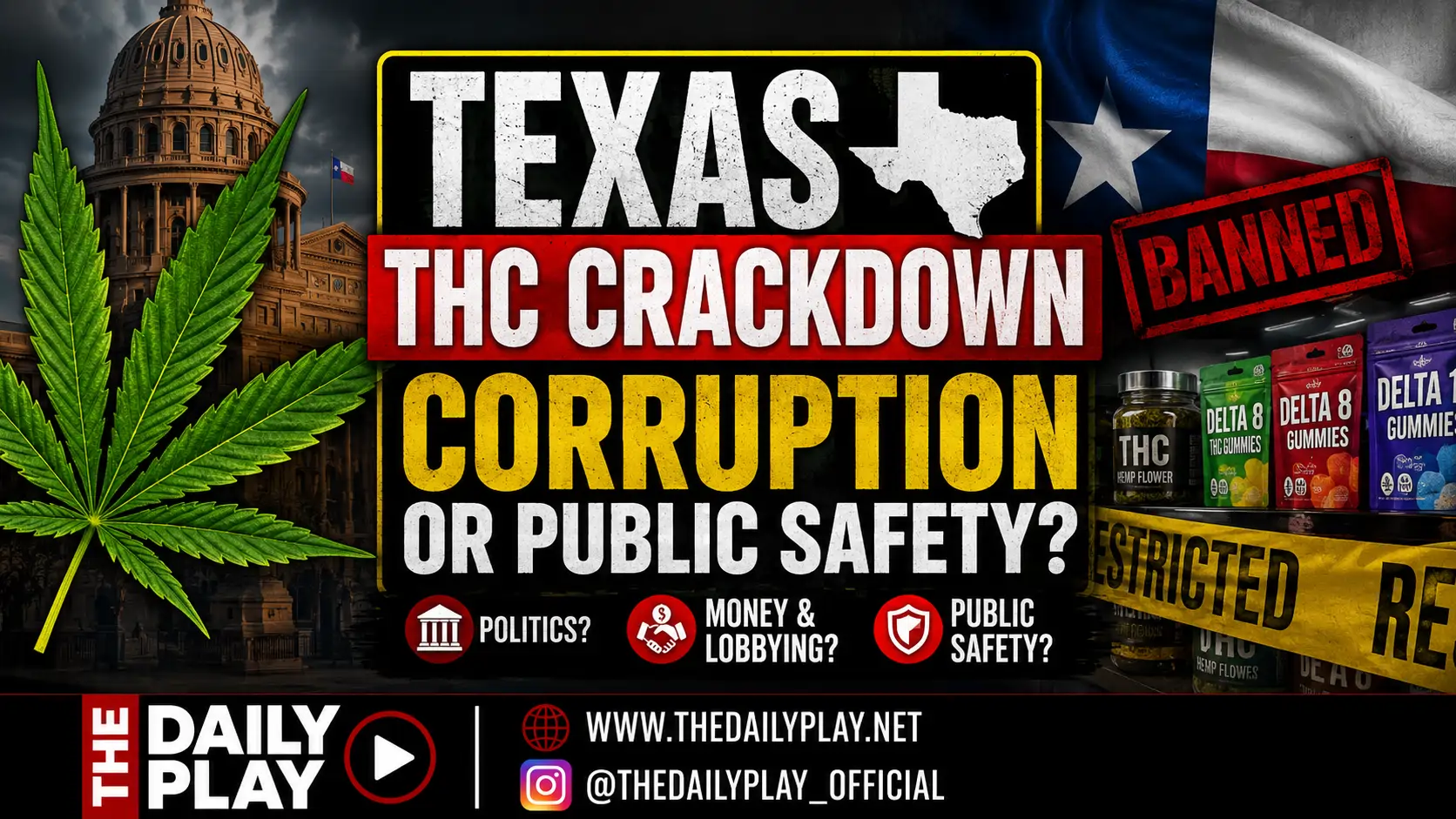
Texas’ rapidly changing THC laws are once again at the center of controversy, with critics arguing that politics, lobbying and powerful business interests have played an outsized role in determining which cannabis products Texans can legally buy. But claims that “THC is banned in Texas because of corruption” require important context: Texas has imposed major new restrictions on intoxicating hemp products, but not every form of THC is categorically illegal, and allegations of corruption are not established facts.
Texas Tightens Its THC Laws in 2026
The legal landscape for hemp-derived THC in Texas changed dramatically this summer. Beginning July 31, 2026, Texas began enforcing restrictions classifying delta-8 THC, delta-10 THC and other THC isomers aside from qualifying delta-9 products as controlled substances. The change followed a Texas Supreme Court decision that cleared the way for enforcement of a Texas Department of State Health Services rule that had been tied up in litigation.
Advertisement
That means products containing substances such as delta-8 and delta-10 that were openly sold for years at smoke shops, convenience stores and hemp retailers across Texas can now expose consumers and sellers to serious legal consequences.
However, saying simply that “THC is banned in Texas” is misleading.
Advertisement
Hemp and qualifying hemp-derived products containing no more than 0.3% delta-9 THC by dry weight remain legally distinct from marijuana under state and federal law. Texas originally adopted that distinction when lawmakers passed House Bill 1325 in 2019 following the federal legalization of hemp under the 2018 Farm Bill.
Texas also maintains its separate Compassionate Use Program, which permits qualifying patients to obtain certain low-THC cannabis products through licensed medical dispensaries.
How Texas Got Here
The current fight stretches back several years.
Advertisement
Texas legalized hemp in 2019, but the booming market that followed went far beyond traditional CBD. Manufacturers discovered ways to produce intoxicating products using cannabinoids derived from federally legal hemp, creating a multibillion-dollar marketplace of gummies, beverages, flower, vapes and other products.
Texas Lt. Gov. Dan Patrick became one of the state’s most prominent advocates for eliminating intoxicating hemp products.
In 2025, Patrick strongly backed Senate Bill 3, legislation designed to prohibit most intoxicating THC products. He argued that retailers had exploited Texas’ hemp law and that high-potency products were being marketed in ways that endangered children.
Advertisement
The Texas Legislature ultimately passed the sweeping legislation.
But Gov. Greg Abbott vetoed it.
Instead of supporting a near-total prohibition, Abbott called for a heavily regulated hemp marketplace. His subsequent executive action emphasized age restrictions, enforcement, packaging and protections intended to prevent minors from obtaining intoxicating hemp products.
Advertisement
The political battle didn’t end there.
New Rules Hit Texas Hemp Businesses
Texas regulators subsequently implemented rules that dramatically changed what hemp businesses could sell.
New regulations that took effect in March 2026 imposed stricter THC limits, testing and labeling requirements, child-resistant packaging and a minimum purchasing age of 21.
Advertisement
The regulations also substantially increased industry fees. According to The Texas Tribune, manufacturing license fees increased from $258 to $10,000 per facility, while retail registration fees jumped from $155 to $5,000.
Smokeable intoxicating hemp products were particularly affected. Retailers warned that the new THC limits would eliminate large portions of their inventories and potentially force smaller businesses to close.
Then came another major development.
Advertisement
The Texas Supreme Court cleared the way for enforcement of the state’s earlier restrictions on delta-8 and related cannabinoids, resulting in the July 31 crackdown.
Where the “Corruption” Allegations Come From
The political fight over THC has produced a second debate: who benefits financially from restricting the hemp industry?
Critics of Texas’ approach have argued that competing industries have incentives to limit hemp-derived THC products. Allegations circulating online point to lobbying activity and political contributions involving businesses that could potentially benefit from a smaller recreational hemp market.
Advertisement
That has fueled claims that the crackdown is driven by corporate influence rather than public safety.
Those concerns deserve scrutiny, particularly when legislation could eliminate businesses while benefiting competitors. But there is an important distinction between documented lobbying or campaign contributions and proof of corruption.
Lobbying and political donations can raise legitimate questions about influence and conflicts of interest, but they do not by themselves establish bribery, corruption or illegal conduct.
Advertisement
Texas officials supporting tighter THC restrictions have publicly offered a very different explanation. Patrick and other proponents say the central issue is an inadequately regulated intoxicating hemp market that developed after lawmakers legalized hemp in 2019, particularly products they argue can be too easily obtained by minors.
Industry advocates counter that Texas could accomplish those goals through age limits, testing, dosage restrictions and packaging regulations rather than prohibition.
The Texas THC Debate Is Far From Over
The dispute has now evolved beyond a simple marijuana legalization debate.
Advertisement
It involves the distinction between marijuana, federally legal hemp, delta-8 THC, delta-9 THC and other intoxicating cannabinoids, along with questions about regulatory authority, consumer safety, individual liberty and the enormous financial interests surrounding cannabis.
For Texas consumers, the most important takeaway is that the viral statement “THC is banned in Texas” oversimplifies the law.
As of August 2026, Texas has dramatically restricted the intoxicating hemp market, and delta-8, delta-10 and several related THC compounds are now prohibited, while qualifying hemp-derived delta-9 products remain subject to a different legal framework.
Advertisement
The claim that these restrictions exist specifically “because of corruption,” however, remains an allegation and political argument—not an established factual conclusion.
What is established is that Texas’ THC market has undergone one of its biggest regulatory transformations since hemp was legalized in the state, leaving consumers, retailers and law enforcement navigating an increasingly complicated set of rules.
The Daily Play will continue following developments as Texas’ legal and political battle over THC continues.