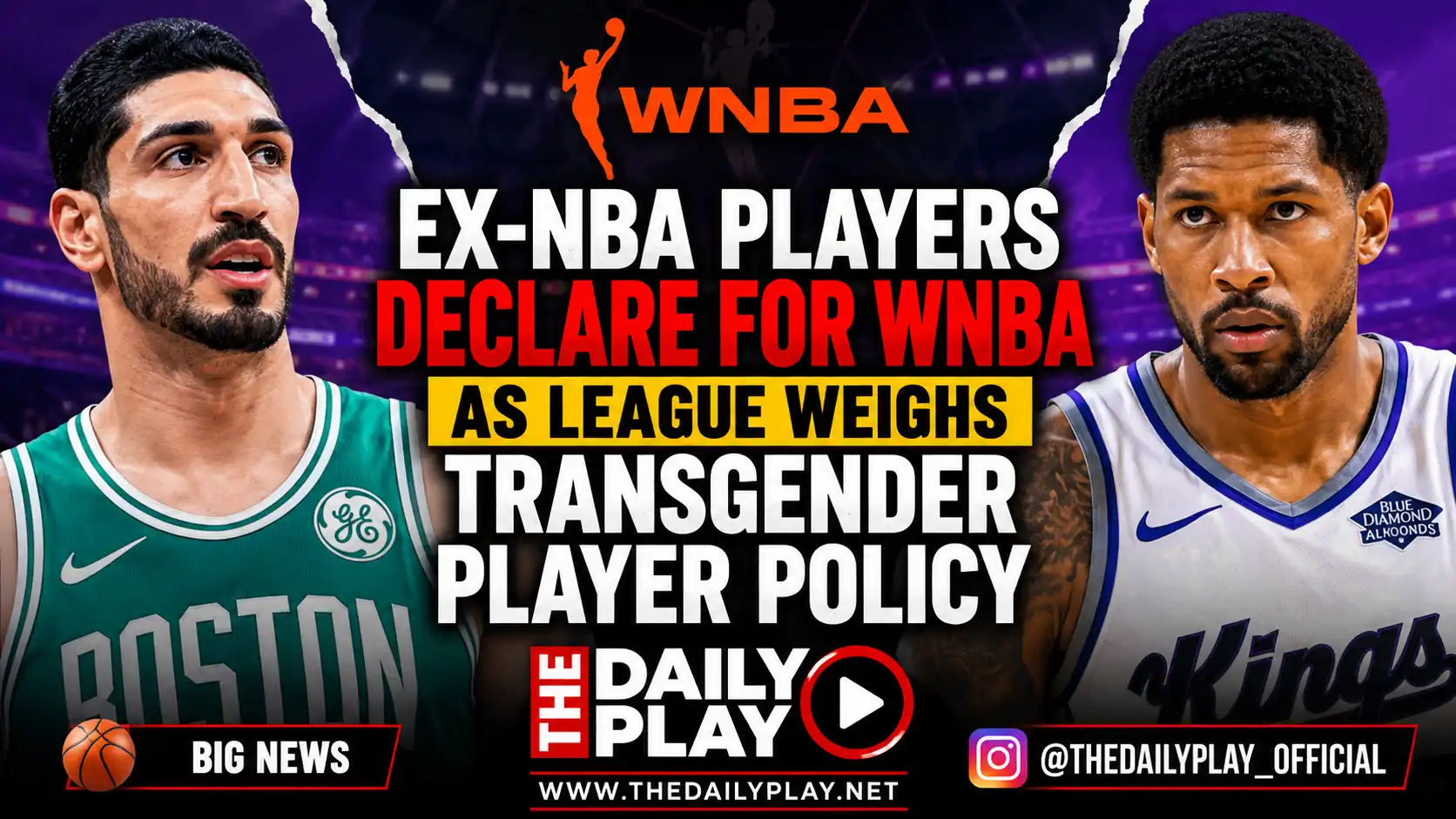
The debate over transgender athletes in women’s professional sports has reached the WNBA after former NBA players Enes Kanter Freedom and Royce White announced plans to declare for the 2027 WNBA Draft, moves they say are intended to challenge the league’s current eligibility rules.
Their announcements come as the WNBA is actively discussing how transgender athlete eligibility should be handled. Commissioner Cathy Engelbert said league officials plan to continue those conversations, including discussions with team presidents and general managers. (ESPN)
Advertisement
Enes Kanter Freedom Says He’s Declaring for the WNBA
Former NBA center Enes Kanter Freedom, who spent more than a decade in the NBA, announced that he intends to declare himself eligible for the 2027 WNBA Draft.
Freedom framed the announcement as a test of the WNBA’s eligibility standards rather than a conventional attempt to restart his professional basketball career. He said his team reviewed the league’s rules and argued that the eligibility language should be applied consistently. (People.com)
Advertisement
The controversy centers partly on language in the WNBA’s governing rules. Reporting on the league’s collective bargaining agreement notes that it states only players who are women are eligible to play in the WNBA, but the cited language does not itself provide a detailed definition of “woman” or a specific transgender-athlete eligibility framework. (AllSides)
Royce White Joins the WNBA Draft Challenge
Former NBA first-round pick Royce White followed Freedom by announcing that he also intends to declare for the 2027 WNBA Draft.
White said he identifies as transgender specifically for the purpose of pursuing professional basketball and argued that denying him an opportunity under those circumstances could constitute discrimination. His announcement is explicitly designed to challenge the boundaries of the WNBA’s existing policies rather than reflect a previously public transgender identity. (New York Post)
Advertisement
Importantly, neither announcement means that Freedom or White has actually been accepted into the WNBA Draft, signed by a team or ruled eligible to play.
Their declarations are currently public challenges to the league’s rules.
WNBA Discussing Transgender Athlete Eligibility
The timing comes as the WNBA faces a broader internal debate over transgender participation.
Advertisement
According to ESPN, Commissioner Cathy Engelbert recently sent a memo to teams addressing the issue and said discussions would continue with league leadership. Engelbert characterized the subject as one requiring thoughtful conversation involving multiple stakeholders. (ESPN)
The debate intensified after Indiana Fever guard Sophie Cunningham publicly said she does not believe transgender women should compete against women in the WNBA.
Other players and figures around the league have expressed more inclusive positions, making the issue a point of disagreement within women’s basketball.
Advertisement
The Women’s National Basketball Players Association (WNBPA) has responded to the broader controversy by reaffirming its commitment to equity and inclusion while warning against using transgender people as political tools. (People.com)
What Happens With the 2027 WNBA Draft?
Despite the viral headlines, there is currently no indication that either former NBA player will actually appear on a WNBA roster.
Their announcements instead place additional pressure on the league to clarify exactly how its eligibility requirements apply to transgender athletes.
Advertisement
The WNBA could ultimately establish more specific standards governing transgender participation, maintain its existing framework or introduce new eligibility requirements as discussions continue.
For now, the most accurate description is that Enes Kanter Freedom and Royce White say they intend to declare for the 2027 WNBA Draft as a deliberate challenge to the league’s eligibility policies.
Whether the WNBA will recognize either declaration — and whether the controversy leads to a formal transgender athlete policy — remains unresolved.
Advertisement
The debate now puts the league at the center of a much larger national conversation over transgender athletes, competitive fairness, inclusion and the future of women’s professional sports. (ESPN)