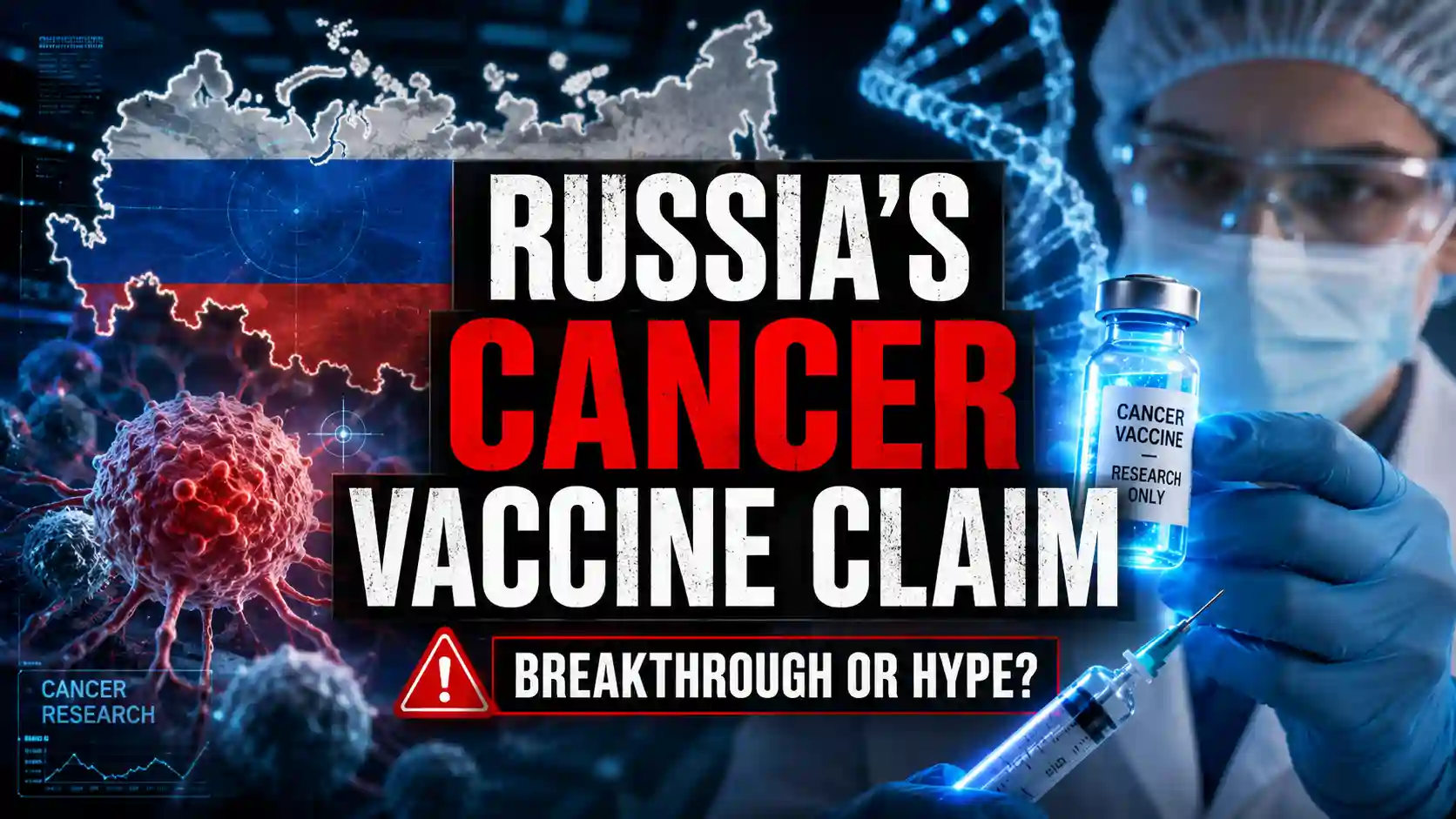
Russia’s reported cancer vaccine breakthrough is making global headlines after officials claimed a new treatment candidate could soon be used for cancer patients and potentially provided free of charge. The announcement has triggered massive interest online, with viral posts claiming Russia has approved a cancer vaccine and plans to distribute it at no cost to patients around the world. But while the development is promising, medical experts say the story is being exaggerated and that there is not yet clear public evidence showing the vaccine is approved for general global use.
The vaccine at the center of the viral discussion is commonly linked to Russia’s cancer immunotherapy work, including EnteroMix and separate personalized mRNA vaccine projects. Russian officials have said preclinical research showed encouraging results, including tumor reduction and slowed tumor growth in early testing. According to reports, the initial focus may be on colorectal cancer, with possible future applications for glioblastoma and certain types of melanoma.
However, the biggest issue is the difference between a promising cancer vaccine candidate and a fully approved cancer treatment. Preclinical testing usually means research done in labs or animals before large human trials. Oncology experts have warned that claims of “100% efficacy” or a universal cancer cure are not supported by the public evidence available so far. Large-scale human clinical trials are still needed to prove safety, effectiveness, dosage, long-term outcomes, and whether the treatment works across real cancer patients.
The idea behind many modern cancer vaccines is not the same as a traditional vaccine that prevents infection. Instead, these treatments are usually designed to help the immune system recognize and attack cancer cells already inside the body. Personalized mRNA cancer vaccines can be built around the genetic profile of a patient’s tumor, making the treatment highly specific but also complex and expensive to produce. That is why claims that any country can immediately distribute a personalized cancer vaccine globally for free should be treated with caution until official rollout details are verified.
Russia’s announcement still matters because cancer vaccines are one of the most exciting areas in modern medicine. Researchers around the world are studying mRNA cancer vaccines, oncolytic virus therapies, tumor-specific immunotherapy, and personalized oncology treatments. If Russia’s vaccine candidates eventually perform well in human trials, they could become part of a major shift in cancer care.
For now, though, the viral claim that Russia has already approved a cancer vaccine for free global distribution appears ahead of the confirmed evidence. The more accurate story is that Russia says it has made progress on experimental cancer vaccine technology and is seeking or awaiting further approval. Until peer-reviewed human trial data, regulatory documents, and real distribution plans are released, patients should not view the vaccine as an available cure.
The Russia cancer vaccine story is a powerful reminder of how quickly hope can turn into viral hype. A real breakthrough would be historic, but cancer patients deserve facts, not exaggerated promises. The world will be watching closely to see whether Russia’s vaccine claims hold up under scientific review, clinical trials, and transparent medical regulation.