Pennsylvania Sets AI Data-Center Rules on Costs, Water and Local Input
Pennsylvania’s new executive order requires qualifying data-center proposals to address electricity costs, water use, transparency and local approval. Here is what changed.
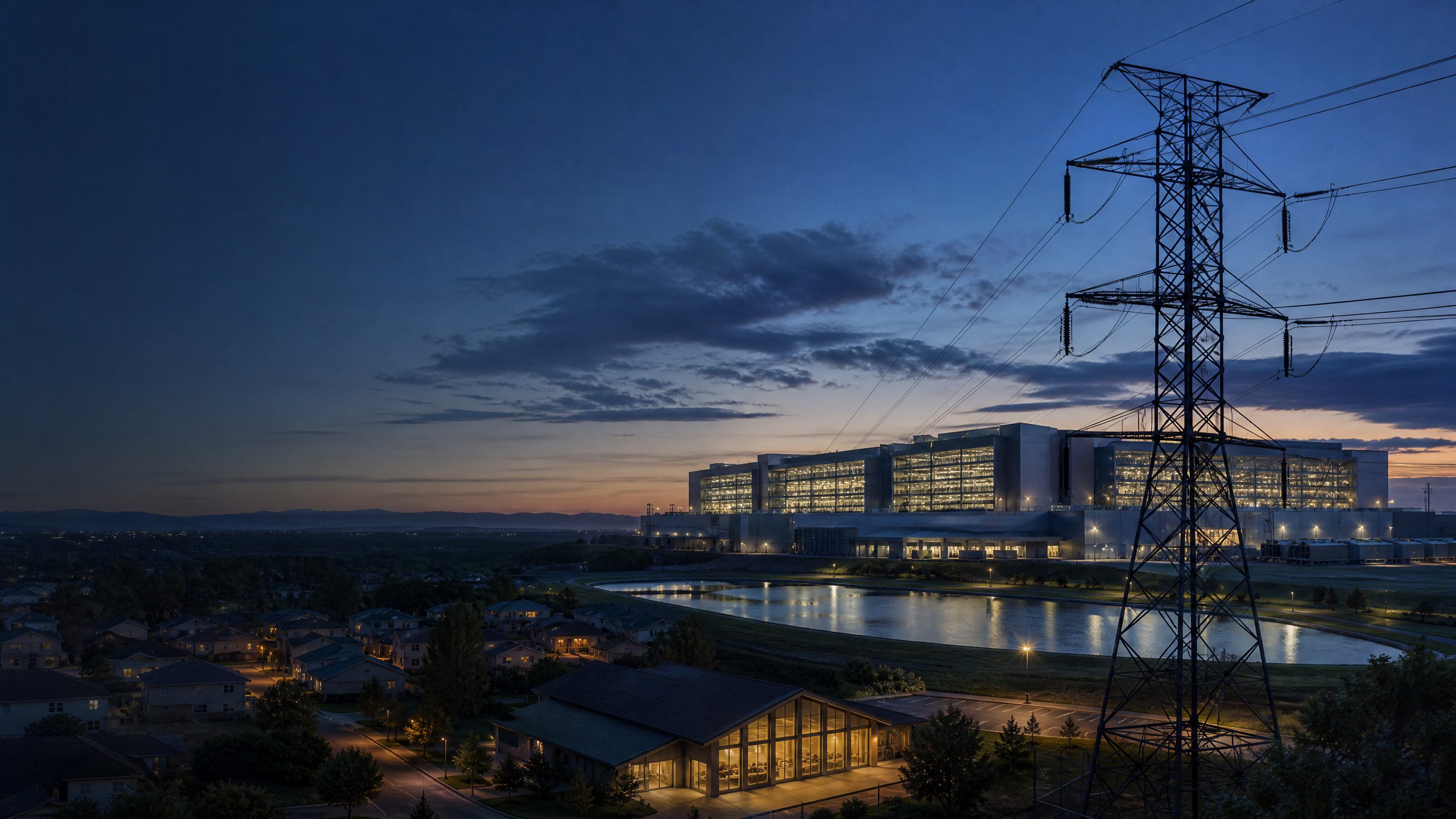
Feature image: editorial illustration created for The Daily Play; it does not depict a specific facility.
Pennsylvania has issued a new set of conditions for proposed data centers, putting electricity costs, water use, transparency and local approval at the center of the state’s permitting approach. The move arrives as the facilities that support artificial intelligence become a larger public-policy issue across the United States.
Advertisement
On August 18, Gov. Josh Shapiro signed Executive Order 2026-05, which directs Pennsylvania agencies to apply the state’s Responsible Infrastructure Development, or GRID, requirements to new data-center permit proposals. The order does not prohibit data-center development. Instead, it requires developers seeking certain state permits to make legally binding commitments to meet the new standards and to receive required local approvals.
What Pennsylvania’s order changes
According to the governor’s office, the requirements cover energy affordability, environmental protection, workforce and economic development, transparency and community engagement. The state says developers must pay the full cost of electricity generation, transmission, distribution and other infrastructure required for their projects, rather than shifting those costs to Pennsylvania households and businesses.
The order also calls for public engagement plans, local approvals, water-conservation commitments and reporting on energy and water use. Pennsylvania says it is removing data-center proposals from its Fast Track permitting program and will not allow nondisclosure agreements for data-center projects under the new approach.
Advertisement
That does not mean every proposed project will receive the same treatment. The Pennsylvania Department of Environmental Protection will still review qualifying applications under state law, but the process now places additional conditions on developers that want the state to begin or complete certain permit reviews.
Why power, water and local approval are becoming central questions
The debate is not limited to one state. In June, Texas Gov. Greg Abbott directed the state’s Public Utility Commission and ERCOT to take steps intended to protect residential ratepayers from infrastructure costs associated with data-center expansion. The Texas directive also called for attention to water-efficient cooling, reporting on electricity and water use, and other practices intended to address local concerns. Read the Texas governor’s directive summary here.
The two actions are not identical, and each applies only within its own state. But together they illustrate the questions now surrounding large computing facilities: who pays for new grid infrastructure, how much water is used, how much information communities receive before development, and what role local authorities have in the approval process.
Advertisement
Public concern about AI is rising
The broader context is a public that has become more wary of AI. A Pew Research Center survey conducted in June found that 52% of U.S. adults said the increased use of AI in daily life made them more concerned than excited, while 9% said they were more excited than concerned. The survey measures attitudes toward AI generally; it does not establish that data-center development is the reason for those views.
Still, proposals for the physical infrastructure behind AI are becoming a visible part of the conversation. Communities evaluating projects may be asking for clearer information about energy demand, water use, noise, land use, jobs and public benefits before deciding whether a development fits local priorities.
What is confirmed—and what remains unsettled
Confirmed: Pennsylvania’s executive order is in effect and establishes new state requirements for qualifying future data-center permit proposals. Texas has separately directed its energy regulators to focus on shielding residential ratepayers from expansion-related infrastructure costs.
Advertisement
Not settled: There is no single national framework governing every data-center project. The practical effect of Pennsylvania’s approach will depend on individual proposals, local approvals, permit reviews and future implementation by state agencies. Claims about a particular project’s effect on household bills, water systems or jobs should be assessed using project-specific evidence rather than assumptions.