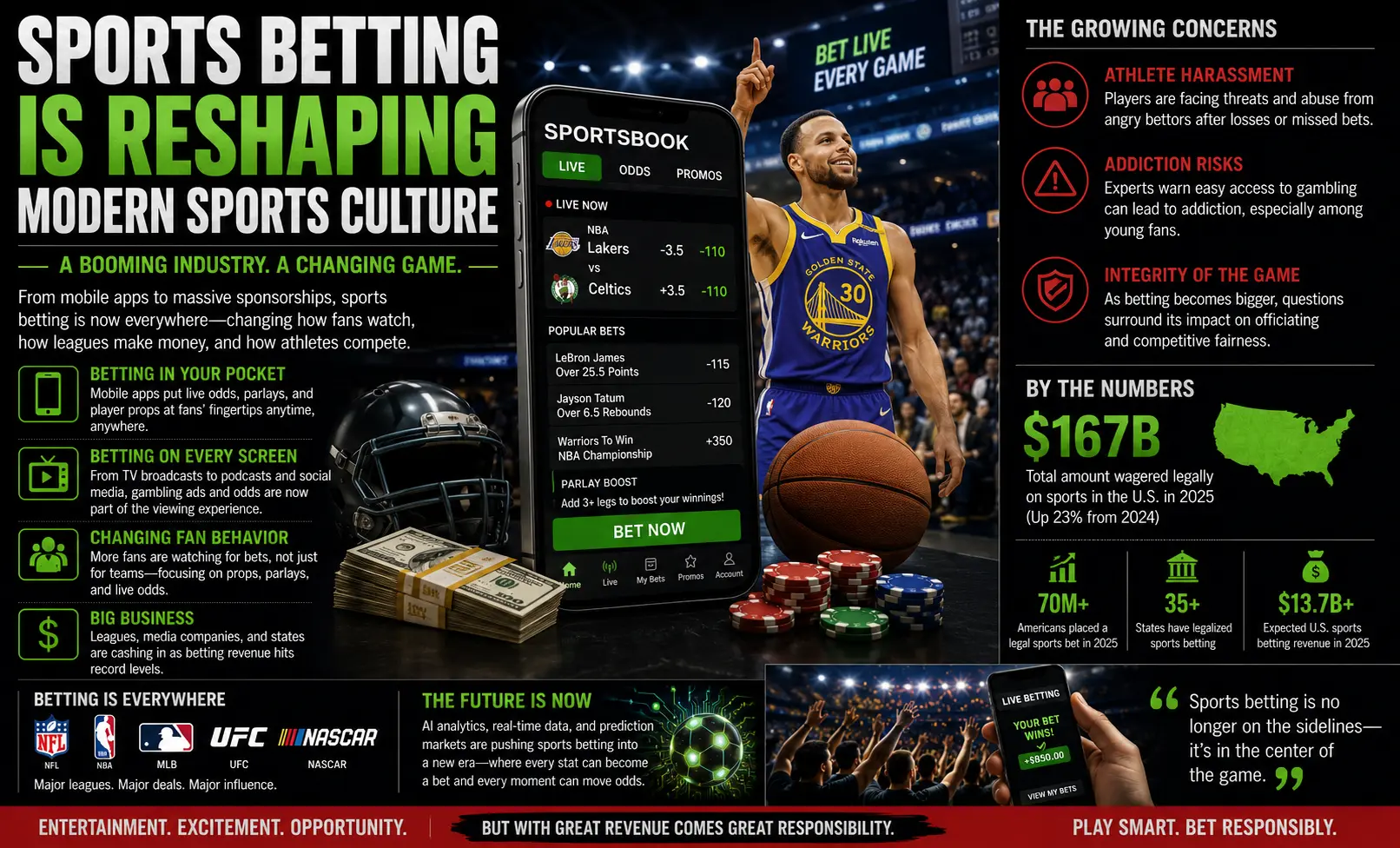
Sports betting has transformed from a niche gambling activity into one of the most powerful forces influencing modern sports culture. Since the U.S. Supreme Court struck down the federal ban on sports betting in 2018, legalized sportsbooks have exploded across America, fundamentally changing how fans consume games, interact online, and engage with athletes. Today, betting odds, prop bets, and live gambling lines are integrated directly into sports broadcasts, podcasts, social media feeds, and even pregame analysis shows. Industry data reported by ESPN showed Americans legally wagered nearly $167 billion on sports in 2025 alone, highlighting the massive scale of the industry’s rapid growth. (ESPN)
The rise of mobile betting apps has made gambling more accessible than ever before, allowing fans to place wagers instantly during live games from their phones. Analysts say this accessibility has dramatically changed fan behavior, with many viewers now watching games less for team loyalty and more for betting outcomes tied to parlays, player props, and live odds. Critics argue that sports broadcasts increasingly resemble gambling promotions, with betting companies purchasing major sponsorship deals across professional leagues, television networks, podcasts, and influencer content. Reports from The Guardian and other outlets have raised concerns that gambling advertising is becoming deeply embedded into sports culture, particularly among younger audiences. (The Guardian)
At the same time, the expansion of legalized gambling has triggered growing concerns surrounding addiction, athlete harassment, and the integrity of sports themselves. Several professional athletes have publicly discussed receiving threats and abuse from angry bettors following losses or missed statistical milestones. Researchers and policy analysts have also warned that constant exposure to gambling advertisements and betting platforms may normalize risky behavior among teenagers and college students. Educational organizations and lawmakers in multiple states have started pushing for stricter regulations tied to advertising, mobile betting limits, and problem gambling prevention programs. (Cornell Law School)
Despite the controversy, sports betting continues generating enormous revenue for leagues, sportsbooks, media companies, and state governments. Betting partnerships now play a major role in professional sports business models, while emerging technologies like AI analytics, prediction markets, and real-time betting systems are pushing the industry even further into mainstream entertainment culture. Supporters argue legalized betting creates safer, regulated environments compared to illegal gambling markets, while critics warn that the financial incentives tied to gambling may continue blurring the line between sports entertainment and betting addiction. As the industry keeps expanding globally, sports betting may ultimately become one of the defining forces shaping the future of modern sports culture itself. (Axios)